


I already wrote an article last June about Lovable called: How VDS Accelerates App Development with Lovable — And How You Can Too, and this is my follow-up thoughts after using the product for almost a year.
This newsletter article hasn’t been written by an AI. I appreciate the speed of AI models, but I think we all get tired of articles sounding the same. If you won’t mind my language quirk, this will sound more personal.
If you want to try Lovable, please use this link to support the newsletter and my work.
But first, what is Lovable and why is it different?
If you haven’t tried an AI code builder yet, Lovable is one of these new tools that let people build complete websites and SaaS from just a prompt. Initially focused on proofs of concept and MVPs, it has evolved over the past year into a powerful machine for creating complex and very performative SaaS.
With just an idea, you can create a workable proof of concept in a couple of hours without any dev knowledge. In a few days, it can become a working MVP connected to external services like Google Auth or n8n (AI agent workflows). Within a week, after completing the legal work, you can connect your SaaS to Stripe and start selling memberships.
Easy, right?
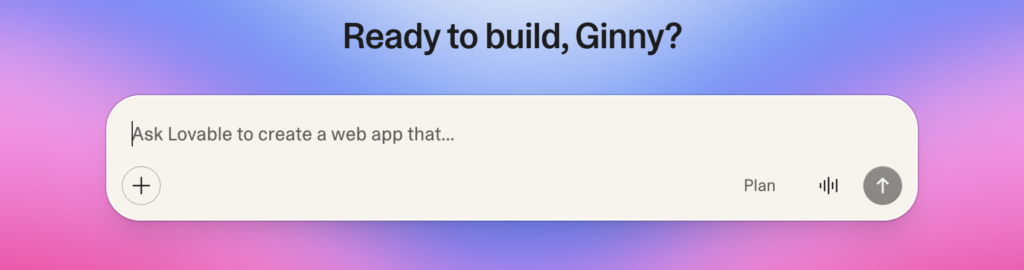
All this for a very affordable cost, between $50 and $200 per month if you are serious about building, with an additional 5 free credits every day.
What are the limitations? Bad news first
Now, what is the catch?
As mentioned in my previous article, one limitation is that to use Lovable, your project must be created within Lovable. This can be tricky if you already have a website or a SaaS in production, because to use the tool, you need to start with it first. This constraint, while understandable from a technical standpoint, can be limiting depending on your business model.
However, once the project has been created, it can be synced with GitHub, and you have full ownership of the codebase.
Another technical limitation is that Lovable Cloud becomes the main database for your project. It is based on a Supabase core, but all new projects now use Cloud instead of a regular Supabase, which comes with an extra cost that, as I am writing this article, is still not clearly defined for long-term use. I do think it is possible to build your project on a different database, but you will lose some core features, so if your goal is to host your data externally, Lovable may not be the right one for you.
These two limitations make Lovable quite different from other AI code systems, but they also enhance its functionality and capacity to build complex architectures and features.
The hot question: can I build my SaaS product on Lovable alone?
To answer the question about building a prod-ready SaaS product on Lovable, it is important to understand how it works. This will also help you understand how to find turnarounds to use fewer credits.
In fact, Lovable is a tool, not an AI coder. It is a container for building with LLMs like Claude and ChatGPT. It provides a well-thought-out interface that gives you access to everything you need to build within its system. It is like your online IDE with a very friendly design, especially if you come from a non-dev background. You don’t have to use terminal commands or understand what git is to create. However, it is also made to be used by developers, which is why I really love this platform.
So, in short, yes, you can build your SaaS product in Lovable only. But this will come at a higher cost, which is the baseline of their business model.
You pay for simplicity of use.
I won’t go into too much detail on how to integrate your own design system and branding into a Lovable app. But it is possible, if there is interest, let me know in the comments 💬, and I’ll write another article on this topic.
How to not use too many credits in Lovable
Since I am neither sponsored nor paid by Lovable to write this article, I don’t see why I couldn’t share a few tricks to help you avoid using a massive amount of credits.
I’ll add a warning here about any changes that require core database updates. If you are not a developer and don’t know much about how databases work, please use Lovable directly for this type of change. Any other tool I’ll mention below won’t handle it as smoothly. If you have any doubts about some features, ask AI about it, but even something as small as adding a new field to a form requires updating the database.
Regardless, for all modifications that don’t require making changes to the core database, it is possible to use a more classic approach to keep building without burning your credits.
To do so, you will need to make your project accessible on GitHub first. Then you’ll be free to work on the codebase anyway you want.
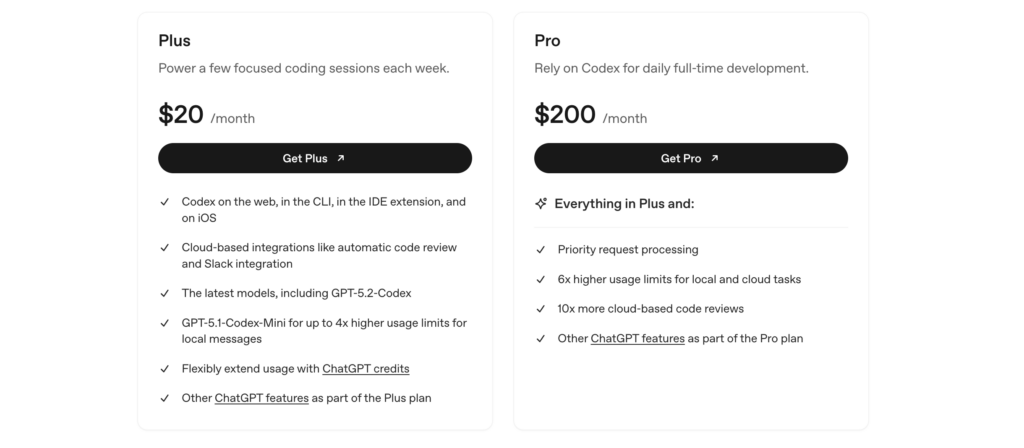
My favorite method is to use Visual Studio Code paired with ChatGPT Codex or Claude extension, in addition to a simple terminal command to see my website modifications live in Google Chrome. By using “npm install; npm run dev,” you will, in fact, get a similar preview result as in Lovable, which keeps updating as you code. That way, you can chat with the LLM in VS Code to make modifications without using Lovable credits but within the limitations of this AI account. Codex, for example, doesn’t make you pay per credit, but limits your utilisation every 5 hours and a week in its $20/month Premium version.
Once you are satisfied with your additions or revisions, a simple git command in VS Code will send your modifications to GitHub, which will immediately appear in Lovable. Now you will just have to update your project there to push it to your live URL. Simple and efficient!
In conclusion, if you haven’t tried Lovable before, now is the time. Let me know your own tips in the comments on how to use fewer credits 💬. Happy building!
I’m Ginny Delaitre, and I write about marketing and UX to help early-stage startups go-to-market and grow. Subscribe to this newsletter to receive the next edition, and share it with other founders. You can also follow me on LinkedIn. 🙌